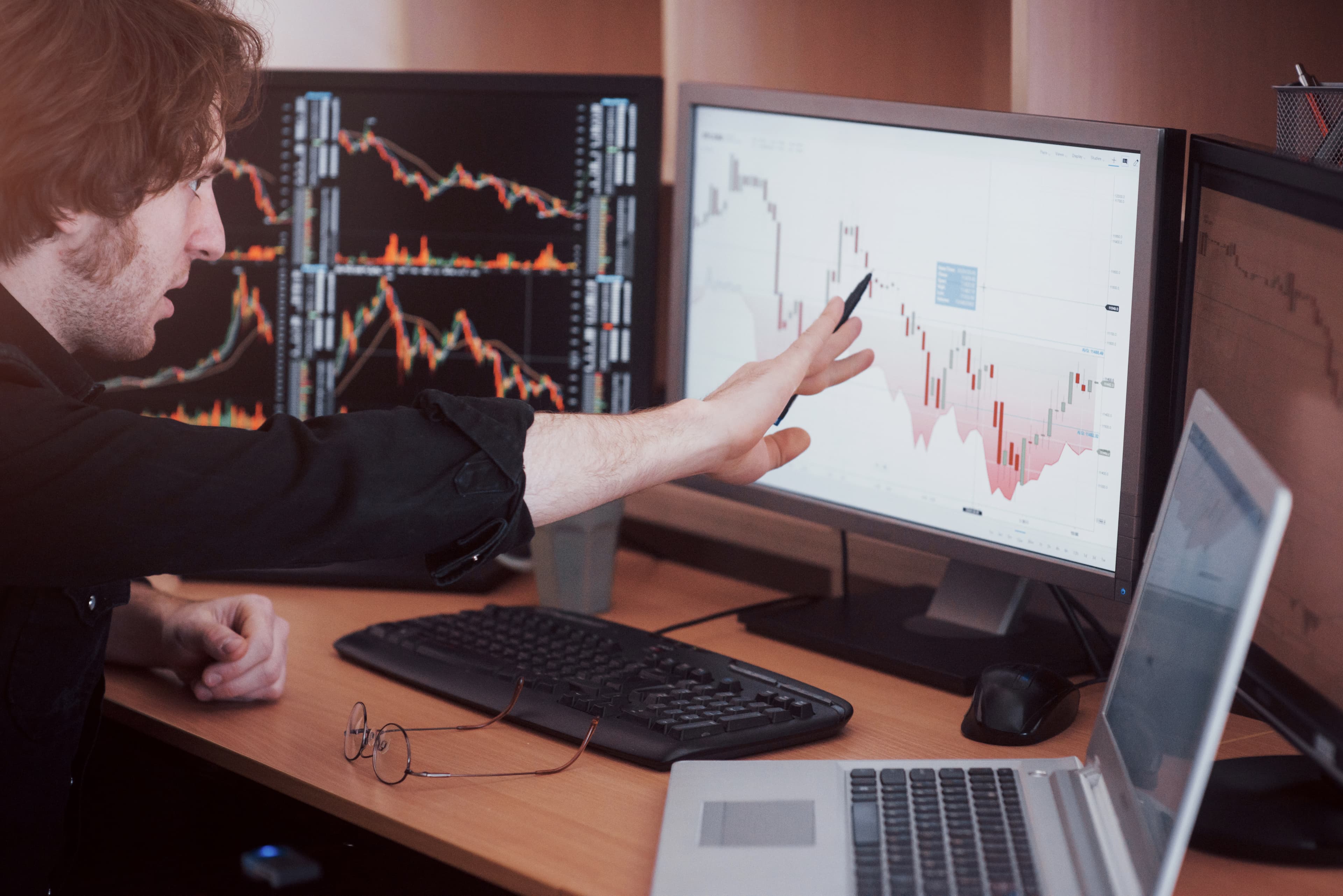
A trading journal is a systematic record of every trade you take — including the setup, entry price, exit price, position size, result, and the mental state you were in when you took it. It is the single most effective tool for identifying patterns in your trading behavior, both good and bad, and for improving performance over time.
For traders attempting to pass prop firm evaluations with FTMO, Apex Trader Funding, TopStep, or any other funded program, a trading journal is not optional. It is the difference between repeating the same behavioral mistakes on your fifth attempt and understanding exactly why you keep failing — and fixing it before your money runs out.
In this guide we cover what a trading journal is, what you should track in it, how to use one effectively in the context of a funded evaluation, and what makes a journal built specifically for prop firm traders different from a generic spreadsheet.
What Is a Trading Journal? The Core Definition
At its most basic level, a trading journal is a log of your trades. But in practice, the most effective journals go far beyond a simple trade log. A complete trading journal captures:
- Trade data: instrument, direction (long/short), entry price, exit price, quantity, PnL
- Setup and rationale: why you took the trade, what pattern or signal triggered the entry
- Risk parameters: stop loss, take profit target, risk-to-reward ratio planned vs. actual
- Emotional state: how you felt before, during, and after the trade
- Rule compliance: whether the trade was part of your trading plan or an impulsive decision
- Performance metrics: win rate, profit factor, average win vs. average loss, consistency percentage
The goal is not just to record what happened — it is to build a data-driven picture of your trading behavior over time. With enough data, patterns emerge: maybe you trade best on Tuesdays between 9:30 and 11:00 AM ET, or maybe 80% of your losses happen when you trade after a big winning day. Without a journal, you will never see these patterns.
Why Trading Journals Are Critical for Prop Firm Evaluations
More than 85% of traders who attempt a prop firm evaluation fail. The common assumption is that they fail because their strategy is not good enough. The data tells a different story: most traders fail because of behavioral patterns they are not aware of.
Here are the most common behavioral failure modes in funded evaluations — and how a trading journal catches each one:
Revenge Trading After a Loss
Revenge trading is the act of entering a trade immediately after a loss, driven by the emotional need to recover the money quickly rather than a genuine trade setup. It is one of the top reasons traders violate max daily loss rules. A trading journal with emotional tagging lets you see exactly how many of your losses came from trades taken within 15-30 minutes of a previous losing trade — and what your win rate on those trades looks like versus planned entries.
Consistency Rule Violations
If you are trading with FTMO, TopStep, or Tradoverse, the consistency rule states that no single day can represent more than 30-40% of your total profits. A trading journal that calculates your daily consistency percentage in real time lets you see when you are approaching the limit — so you can reduce position size or stop trading for the day before you accidentally violate the rule.
Oversizing After a Winning Streak
One of the most counterintuitive failure patterns: traders lose their evaluations not on bad days, but on the days after several consecutive wins. Confidence leads to larger position sizes, which leads to one oversized loss that wipes out the entire cushion. A journal that tracks your position sizes over time makes this pattern immediately visible.
The most dangerous day in a funded evaluation is not the day after a loss — it is the day after a strong winning streak. Studies of funded trader behavior consistently show that account-ending trades most often occur after 3 or more consecutive winning days.
What to Track in Your Trading Journal
Not all data is equally valuable. Here is a prioritized list of what to track, organized by how much insight each field provides:
| Field | Why It Matters | Priority |
|---|---|---|
| Instrument + Direction | Identify which markets and setups are most profitable | Essential |
| Entry / Exit Prices | Calculate real PnL and R-multiple | Essential |
| Position Size | Detect oversizing patterns over time | Essential |
| Emotional State (pre-trade) | Correlate mental state with trade quality | High |
| Setup Type / Tag | Identify which setups work and which don't | High |
| Trade Followed Plan? | Measure rule compliance rate over time | High |
| Time of Entry | Find your optimal trading hours | Medium |
| News/Market Context | Explain outlier results | Medium |
| Screenshots | Visual review for pattern recognition | Medium |
| Notes / Commentary | Qualitative insights that numbers miss | Useful |
The KPIs Every Funded Trader Should Monitor Daily
Beyond individual trade data, your journal should aggregate your trades into key performance indicators (KPIs) that mirror exactly what prop firms measure when they review your account:
Profit Factor
Profit factor is the ratio of gross profits to gross losses. A profit factor above 1.5 is considered healthy for most futures strategies. A trader with a 60% win rate but tiny wins and large losses can have a profit factor below 1.0 — meaning they are losing money overall despite winning more than they lose.
Consistency Percentage
For any evaluation with a consistency rule, your journal should show you this number every single day: what percentage of your total profits came from your single best day. If that number climbs above 28% and you are at FTMO, it is time to reduce your size for the rest of the evaluation.
Equity Curve
A visual representation of your account value over time. A healthy equity curve shows steady, upward progress with controlled drawdowns. Seeing your equity curve flatten or dip after a period of strong gains is an early warning sign of behavioral deterioration — usually overconfidence or fatigue.
Max Drawdown from Peak
This is the number your prop firm watches most closely. Your journal should show your current drawdown from peak equity in real time — not just at end of day. Knowing you are at 4.5% drawdown when the limit is 5% changes how you trade in the afternoon session.
Zentrade calculates all of these KPIs automatically from your trade data. No spreadsheets, no manual formulas — just your numbers, updated in real time.
Try Zentrade FreeTrading Journal Formats: Spreadsheet vs. Dedicated App
Most traders start with a spreadsheet. It works as a starting point, but spreadsheet-based journals have real limitations when you are managing multiple prop firm evaluations simultaneously:
| Feature | Spreadsheet | Dedicated App (Zentrade) |
|---|---|---|
| Trade logging | Manual entry | Manual + CSV import |
| KPI calculation | Manual formulas | Automatic, real-time |
| Consistency % tracking | Build manually | Built-in with daily view |
| Equity curve visualization | Basic charts | Interactive chart |
| Emotional tagging | Text columns | Structured tags + calendar |
| Multi-account support | Multiple tabs | Multiple accounts, separate dashboards |
| Prop firm rule benchmarks | Manual setup | Configurable per account |
| Revenge trading detection | Not possible | AI-powered detection (ZenMode) |
| Mobile access | Limited | Full web app |
| Collaboration / sharing | Export only | Dashboard links |
A spreadsheet can work for a trader with one account and plenty of time to maintain it. But for traders running two or three evaluations simultaneously and trying to spot behavioral patterns quickly, a dedicated journal application saves hours per week and catches risks that manual review misses.
How to Build a Journaling Habit That Actually Sticks
The most common failure mode with trading journals is not tool selection — it is consistency. Traders use their journal for two weeks, see a losing streak, and stop logging because looking at the data feels painful. Here is how to build a habit that survives drawdowns:
- 1Journal immediately after each trade — not at end of day. The emotional context is freshest right after the trade closes.
- 2Keep entries short — a one-sentence rationale and an emotional tag are enough for daily practice. Save detailed analysis for weekly reviews.
- 3Schedule a weekly review — 20-30 minutes on Sunday to review the week's trades, identify the best and worst decision, and set one behavioral goal for the next week.
- 4Never skip a losing trade — the entries that feel most uncomfortable to write are usually the ones with the most to teach you.
- 5Focus on process, not outcome — a trade that followed your plan perfectly but lost is a good trade. A trade that violated your plan but happened to win is a dangerous trade.
- 6Use tags consistently — standardized tags (revenge, planned, news, FOMO, boredom) make pattern analysis possible. Freeform notes are valuable but not analyzable.
How Zentrade Supports Funded Futures Traders Specifically
Zentrade is a trading journal built from the ground up for futures traders going through prop firm evaluations. Unlike generic trading journals, Zentrade's features map directly to the metrics that funded programs measure.
With Zentrade you can set up a separate account for each evaluation you are running — each with its own profit target, max daily loss limit, and consistency rule threshold. The dashboard then shows you your real-time standing against those benchmarks every day, so you are never surprised by a rule violation.
The Professional plan includes advanced analytics like profit factor, equity curve, consistency percentage, and advanced filtering — everything you need to identify the patterns keeping you from getting funded. The ZenMode plan adds AI-powered revenge trading detection that flags when your behavior after a loss matches the profile of a revenge trade, giving you a chance to pause before you do damage.
Zentrade starts at $0 — the free plan lets you log trades and track your basic KPIs. For traders who are serious about passing their next evaluation, see our full comparison of the best trading journals for prop firm traders.
Frequently Asked Questions
What should I write in a trading journal?
At minimum: the instrument, direction, entry price, exit price, position size, and PnL. Add emotional state (one word is enough), whether the trade followed your plan, and a brief reason for the entry. After each week, review all entries to identify behavioral patterns.
How often should I update my trading journal?
Ideally after every single trade, while the trade is still fresh. At a minimum, update it at end of every trading day. Weekly is not sufficient — you lose the emotional context and make it harder to spot intraday patterns.
Can a trading journal help me pass a prop firm evaluation?
Yes — and substantially. A journal that tracks your consistency percentage, drawdown from peak, and emotional tags in real time lets you catch rule violations before they happen. Most prop firm failures are behavioral, and a journal is the most direct tool for behavioral awareness.
What is the best free trading journal for futures?
Zentrade offers a free plan with manual trade logging and basic KPI tracking — no credit card required. For more advanced analytics including profit factor, equity curve, and consistency percentage, the Professional plan at $29/month includes everything a prop firm evaluation requires.
Is a spreadsheet good enough as a trading journal?
For a single account with limited trade volume, yes. For traders running multiple prop firm evaluations simultaneously, a dedicated journal application with automatic KPI calculation, prop firm rule benchmarking, and emotional tagging saves hours per week and catches risks that manual spreadsheets cannot flag automatically.
What is the consistency rule and how does a journal help with it?
The consistency rule (enforced by FTMO, TopStep, and Tradoverse) states that no single trading day can account for more than 30-40% of your total profits. A journal that calculates this percentage daily lets you see when you are approaching the limit and adjust your position size before you accidentally violate it.
Do professional traders keep trading journals?
Yes. Trading journals are standard practice among professional traders, hedge fund managers, and prop traders. The level of detail and the tools used vary, but the habit of systematic review is nearly universal among consistently profitable traders.
You might also like
- Best trading journal for prop firms 2025
- How to track emotions in trading
- Zentrade vs TradeZella: direct comparison
- Qué es un trading journal y para qué sirve
Sources & Official Resources
- Investopedia — What is a Trading Journal
- CME Group — Educational resources for futures traders
- FTMO — rules a good journal should track
Start journaling your trades today with Zentrade — the trading journal designed for futures traders in prop firm evaluations. Free plan available, no credit card needed.
Create Your Free Account