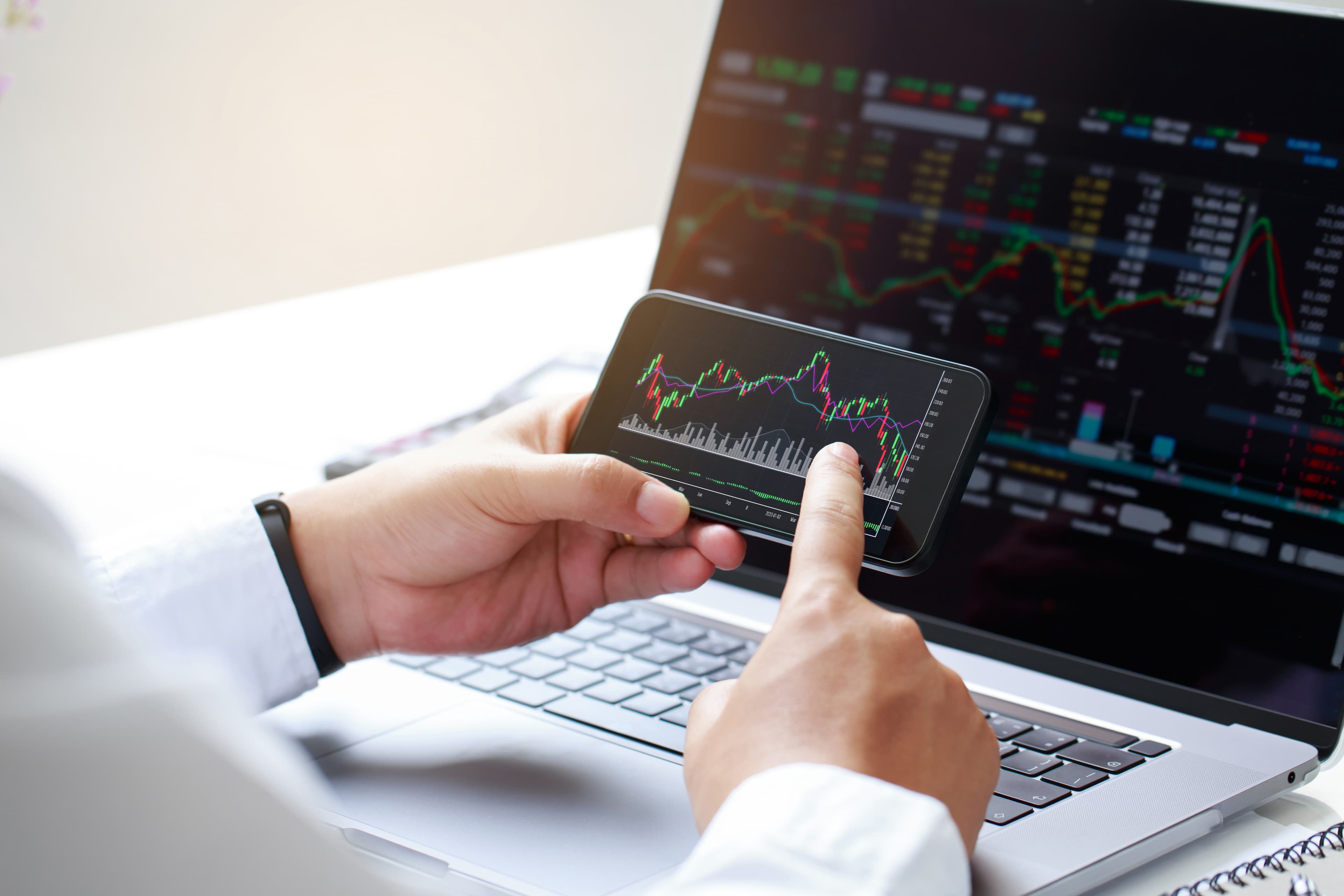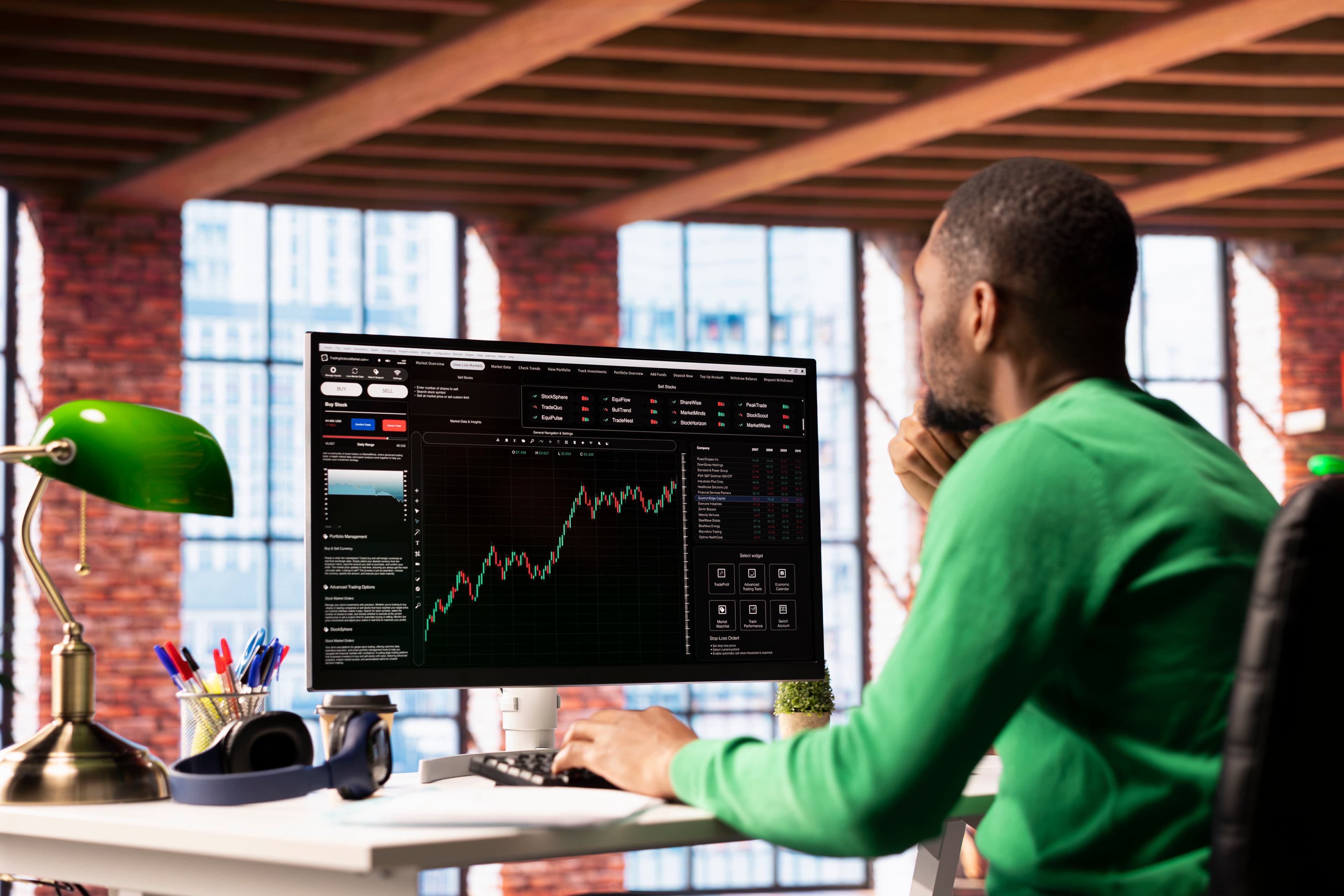
Revenge trading is the act of entering a new trade immediately after a loss — not because a setup is present, but because you feel a compulsive need to recover the lost money. It is the single most common cause of evaluation failures in FTMO, Apex, TopStep, and every other prop firm program. Traders who understand their strategy perfectly, who have a clear edge, and who know the rules exactly still fail evaluations because of this one behavioral pattern.
The reason revenge trading is so hard to stop is that it does not feel like emotional trading in the moment. It feels like a logical response: you have a loss, you see the market still moving, you know you can trade — so you trade. The problem is not the logic. The problem is the emotional state driving the decision: anxiety, frustration, ego protection.
What Revenge Trading Actually Looks Like in Futures
In a live trading session, revenge trading has a recognizable sequence:
- 1You take a planned trade with a defined stop. The stop gets hit.
- 2Instead of stepping back to assess, you immediately look for the next entry.
- 3The next entry is often in the opposite direction of your original trade — 'the market must be going the other way now.'
- 4The second trade is entered at a faster pace, with less planning, and often with a larger size.
- 5The second trade also loses. Now you are down 2× your planned daily risk.
- 6A third trade follows. By now your decision-making is completely emotion-driven.
- 7Within 90 minutes of your original stop-out, you have hit the daily loss limit and the evaluation is over.
Data from trading journals shows that 73% of daily loss limit violations happen within the first 3 trades of a session that started with a stop-out on trade 1. The sequence — loss → revenge → bigger loss → daily limit — is extremely common and completely preventable.
The Behavioral Triggers Behind Revenge Trading
Revenge trading does not come from a single cause. Understanding your specific trigger is the first step to stopping it.
Trigger 1: Entitlement After Preparation
You spent time on your pre-session analysis. You identified a setup. You followed your plan. And then the market stopped you out. This feels unfair — you did everything right. The feeling that you 'deserve' to get that money back is one of the most powerful revenge trading triggers. The market does not care how much preparation you did.
Trigger 2: Account Balance Anxiety
In prop firm evaluations, you are not just tracking PnL — you are tracking proximity to a floor that ends your evaluation. Every loss feels like it costs you twice: the dollar amount and the proximity to failure. This creates a feedback loop where losses feel more urgent, which leads to faster re-entry, which leads to worse trades.
Trigger 3: The 'One Good Trade' Thinking
After a stop-out, traders often enter the next trade with the thought: 'I just need one good trade to get back to breakeven and then I'll stop.' This is one of the most dangerous cognitive frames in trading. It removes the question of whether a setup actually exists and replaces it with the question of whether the market 'owes you' a winning trade.
Trigger 4: Comparison to Missed Opportunity
You take a long trade, get stopped out, and then watch the market continue higher. 'I was right about the direction — I just had bad timing.' This leads to re-entering the same trade with a worse entry, often near a new resistance level where the original setup no longer exists.
How to Detect Revenge Trading Before You Act
The practical challenge with revenge trading is that you need to identify it in the 30-60 seconds between a losing trade and your next potential entry. Here are the signals to watch for:
- Time from close to next entry is under 10 minutes — most legitimate setups take longer than this to form after a previous trade
- You are increasing position size relative to the previous trade — this is a direct behavioral signal of trying to recover
- You cannot articulate a clear reason for the next trade in one sentence — if the reason is 'the market has to go this way,' that is not a setup
- You closed your journal or stopped logging before re-entering — the act of not logging is itself a behavioral flag
- You feel urgency — good trades do not feel urgent. Good trades feel like patience being rewarded. If you feel that you must enter now, that is emotional trading.
The 20-Minute Rule
The most effective single behavioral rule for stopping revenge trading is simple: after any losing trade, you are not allowed to place another trade for 20 minutes. You may watch the market. You may take notes. You may review your charts. But no order entry for 20 minutes.
This rule works because it breaks the emotional loop. By the time 20 minutes have passed, your cortisol levels have dropped, your decision-making has returned to baseline, and you can evaluate the next potential trade with the same objectivity you had before the loss.
Set a physical timer on your phone after every stop-out. Not a mental note — an actual timer. The ritual of setting the timer also serves as a behavioral interrupt that signals the transition from reactive mode to analytical mode.
Journaling as Revenge Trading Prevention
The single best technical tool for preventing revenge trading is a trading journal with behavioral tracking. Here is why: if you are required to log your emotional state and trade rationale immediately after closing every position, you create a mandatory 2-3 minute pause between trades. That pause is often enough to break the revenge trading loop before it starts.
Beyond the pause, journaling creates a data record that makes the revenge trading pattern impossible to ignore. When you can see in a table that your three biggest losing days all had the same sequence — loss in trade 1, revenge entry in trade 2, daily limit in trade 3 — and that all three were triggered by trading after 10:30am news events, you have actionable information. The pattern becomes visible. Visible patterns can be addressed; invisible ones can only be repeated.
Structural Rules That Prevent Revenge Trading
Beyond behavioral rules, there are structural constraints you can build into your trading setup that make revenge trading mechanically harder:
- Set a hard daily loss limit at 60-70% of the prop firm limit — not 100%. If FTMO's limit is $5,000, your personal limit is $3,000. When you hit your personal limit, close the platform for the day.
- Maximum of 3 trades per day — once you have closed 3 positions (win or lose), your trading day is over. This removes the ability to spiral.
- No trading in the last 30 minutes before market close — positions entered in the final window are almost always emotionally driven.
- Log every trade before placing the next one — if you cannot log immediately, you cannot trade. This creates a natural pause and a behavioral gate.
- Close all platforms after hitting your target — defining a daily profit target and stopping when you reach it prevents the 'give it all back' sessions that often come from overconfidence.
How AI-Powered Journals Detect Revenge Trading Automatically
The next level of revenge trading detection is algorithmic. Zentrade's ZenMode plan includes AI-powered revenge trading detection that flags the behavioral pattern in real time based on your trade data — specifically:
- A trade that enters within 30 minutes of a previous losing trade
- A position that is larger than your recent average position size following a loss
- Three consecutive losing trades within any 2-hour window
When the algorithm detects these patterns, it surfaces a ZenMode alert on your dashboard — a visual interrupt that forces you to acknowledge what your behavior is showing before you decide whether to continue trading.
Zentrade's ZenMode detects revenge trading patterns automatically — flagging the behavioral sequence before you act on it. Free to start on any plan.
Start Free — No Credit CardFrequently Asked Questions
Is revenge trading always obvious?
No. Most revenge trades feel completely justified in the moment. The most dangerous form of revenge trading is when you have a technically valid reason to enter but you would not have taken that trade under normal circumstances — only your emotional state made it feel urgent.
Can you be a profitable trader and still do revenge trading?
Yes, and this is why it is dangerous. Many traders have a positive edge on their first trade of the day and a significantly negative edge on trades 2 and 3 that follow losses. The revenge trading wipes out gains from good trades. Your journal data will show this pattern clearly if you track emotional state per trade.
Does taking a break actually help?
Yes, for a physiological reason. Trading losses trigger a stress response that increases cortisol and impairs the prefrontal cortex — the brain region responsible for rational decision-making. A 20-minute break is enough for cortisol to partially clear. Walking away from the screen for an hour is even better.
What should I do immediately after hitting my stop?
Close the order entry window. Log the trade immediately with your emotional state. Set a 20-minute timer. Do not watch the market during this period. Review your notes on what happened after the timer goes off before deciding whether to continue trading.
You might also like
- ¿Qué es el revenge trading?
- Trading psychology for futures traders
- How to pass the FTMO evaluation
- How to track emotions in trading
Sources & Official Resources
- Investopedia — What is Revenge Trading?
- FTMO Blog — Trading Psychology Resources
- CME Group Education — Futures Trading Risk Management
Zentrade is the trading journal built to detect and prevent revenge trading. Real-time behavioral alerts, emotional state tracking, and AI analysis for prop firm traders.
Try Zentrade Free